Choosing Spray Paint and Materials for Stencil Art
We still remember the first large stencil we ever cut — a three-layer portrait destined for a laneway wall in Melbourne. We spent two weekends cutting it by hand, taped it up on a crisp Saturday morning, and watched the whole thing turn into a fuzzy, bleeding mess within seconds. The culprit wasn’t our cutting technique or the design; it was a cheap high-pressure can from a hardware store that spat out thick, uncontrollable blobs of paint. That painful lesson sent us down a years-long path of testing paints, films, and tools, and this guide is the result. If you’re getting into stencil art in Australia, here’s everything our team has learned about choosing supplies that actually work — and where to find them locally.
Why Paint Choice Makes or Breaks Your Stencil
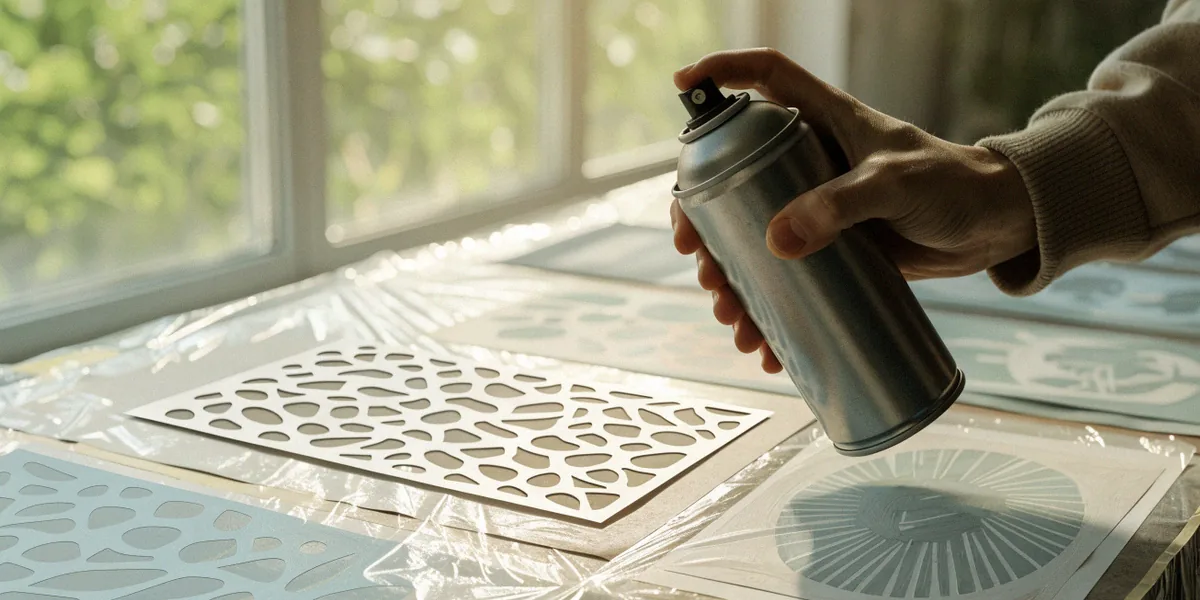
The single biggest factor in clean stencil edges is the paint itself. A stencil works by masking areas of a surface, and the moment paint seeps under the edge of your film or card, you lose the crisp line that makes stencil art look sharp. Low-pressure, high-pigment paints are the answer: they spray in a controlled, fine mist that settles quickly instead of blasting wet paint sideways under the stencil edge. Cheap hardware-store cans are usually high-pressure and thin on pigment, which means you have to spray longer to build coverage — and the longer wet paint sits against your stencil edge, the more it creeps underneath. The result is fuzzy lines, clogged nozzles, and a lot of wasted afternoons.
Low-Pressure vs High-Pressure Cans
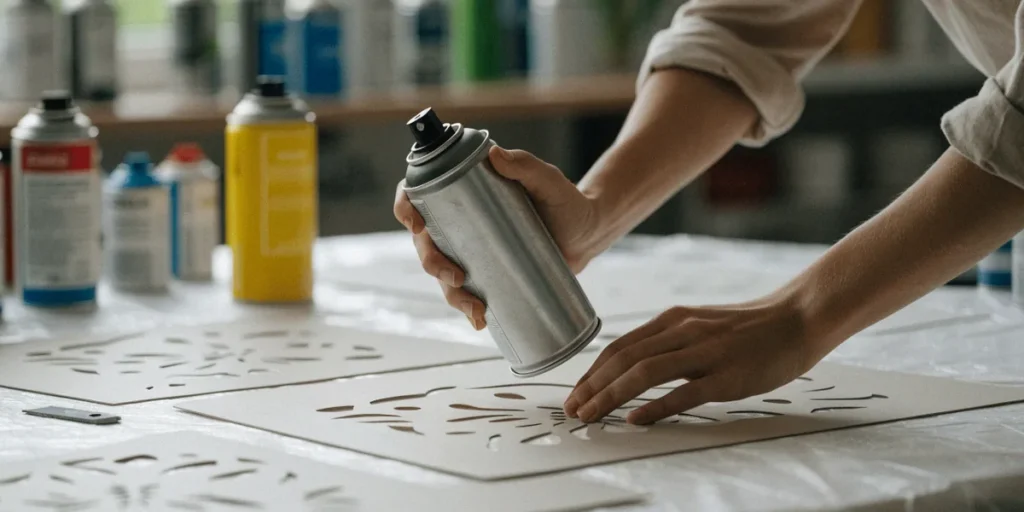
Low-pressure cans release paint at a gentler rate, giving you far more control over coverage and edges. They’re ideal for fine detail, multi-layer work, and anything where you need to build colour gradually. High-pressure cans are faster for filling large areas like backgrounds, but they’re unforgiving on intricate stencils — the paint arrives too fast and too wet. For most stencil work, we reach for low-pressure formulas first and only switch to high-pressure cans for big block fills where edge precision doesn’t matter.
The Role of Pigment and Solvent
Pigment concentration determines how much paint you need to spray to achieve solid colour. High-pigment paints cover in light passes, which keeps the stencil edge dry and sharp. Solvents matter too: fast-drying formulas reduce the window in which paint can bleed, while slow-drying or overly solvent-heavy paints stay wet longer and creep under edges. Matte finishes are also preferable because they photograph well and don’t reflect harshly on outdoor walls — a detail that matters if you’re documenting work for prizes or portfolios.
Top Spray Paint Brands for Australian Stencil Artists
Australia has excellent access to specialist spray paint, both locally made and imported. Three brands come up again and again in our studio and in the wider street art Melbourne scene: MTN 94, Ironlak, and Molotow Belton. Each has a distinct personality, and knowing which to reach for will save you both money and frustration.
MTN 94: The Fine-Art Favourite
MTN 94 is a low-pressure spray paint popular for stencil art due to its matte finish and fine atomisation. The fine atomisation means the paint lands as a soft, even mist rather than a wet splatter, which is exactly what you want when spraying through detailed cuts. Its matte finish dries flat and photographs beautifully. The colour range is huge, and it’s readily available through specialist suppliers and online stores shipping across Australia.
Ironlak: Local and Affordable
Ironlak is an Australian-owned spray paint brand founded in Brisbane and widely used in Melbourne’s street art scene. That local identity matters — it’s affordable, consistently stocked, and designed with Australian conditions and artists in mind. Ironlak offers both low-pressure and high-pressure lines, so you can choose the right can for detail work versus large fills. If you’re just starting out and want a reliable, budget-friendly option for spray paint stencils, Ironlak is a smart first purchase.
Molotow Belton: Premium Pigment
Molotow Belton sits at the premium end of the market, with dense pigment and a smooth, controlled spray. It’s a favourite among artists producing gallery-quality stencil work, and the Australian Stencil Art Prize regularly highlights artists using brands like Molotow Belton. The trade-off is price — it costs more per can — but for final pieces and exhibition work, the coverage and consistency justify the investment.
Stencil Materials: From Cardstock to Mylar
What you cut your stencil from matters just as much as what you spray through it. The right material holds a clean edge, survives repeated use, and doesn’t warp or tear when paint hits it. Here’s how the common options stack up.
Paper and Cardstock for Quick Tests
Standard paper is fine for one-off tests and rough drafts, but it saturates quickly and tears when wet. Cardstock is a step up — heavier and more absorbent-resistant — and works well for short-run stencils or quick experiments. Neither is durable enough for repeated spraying, so treat them as disposable practice materials.
Acetate and Mylar for Durability
Acetate is a solid mid-range option: transparent, easy to cut, and reusable for a handful of sessions before edges soften. For serious, reusable stencils, Mylar is the gold standard. Mylar sheets of 5mm thickness are recommended for reusable stencils and are available at Australian art suppliers like Eckersley’s. The thickness holds a crisp edge through dozens of sprays, resists curling, and lets you see your design underneath while cutting. Art Scene also stocks suitable Mylar sheets for intricate designs. If you’re cutting multi-layer work or anything you plan to reuse, invest in Mylar from the start.
Adhesives and Repositionable Sprays
Even the best Mylar will bleed if it isn’t held tight against the surface. Repositionable spray adhesive is the professional solution — a light mist on the back of the stencil holds it flat, then releases cleanly without tearing the surface or leaving residue. For smaller stencils, low-tack masking tape does the job. Avoid permanent adhesives, which will rip your stencil and damage walls.
Essential Tools Beyond Paint and Stencil Film
Paint and film get all the attention, but the supporting tools determine how clean your cuts are and how safely you work. Fortunately, you don’t need a specialist art budget to get set up.
Cutting Tools and Mats
A sharp scalpel is non-negotiable — dull blades drag and tear film instead of slicing it. Bunnings Warehouse stocks affordable cutting mats, scalpels, and masking tape suitable for stencil art, so you can build a complete cutting kit in one trip. A self-healing cutting mat protects your table and keeps blade tips sharp longer. Change blades often; a fresh blade is cheaper than ruining a sheet of Mylar.
Masking and Taping
Masking tape secures stencils, blocks off areas you don’t want painted, and helps you align multi-layer designs. Buy a few widths — narrow tape for detail work, wide tape for blocking large areas. Painter’s tape is preferable on delicate surfaces because it releases without peeling paint.
Safety and Ventilation
Spray paint fumes are no joke. Always work outdoors or in a well-ventilated space, wear gloves to protect your hands, and consider a proper respirator mask for long sessions. Store cans away from heat and direct sun — an important consideration in Australian summers, when a can left in a hot car can become genuinely dangerous.
Where to Buy Supplies in Australia
The good news for Australian stencil artists is that supplies are easy to find, both online and in person. Here’s where our team shops.
Online Retailers and Shipping
Ironlak’s online store and MTN Australia both ship nationally and stock the full ranges, including low-pressure cans suited to stencil work. Specialist online retailers carry Mylar sheets, caps, and adhesives that physical stores sometimes run out of. Note that spray paint shipping can be restricted by courier, so check delivery options before ordering in bulk.
Local Art Stores and Community
Eckersley’s and Art Scene stock Mylar and cutting supplies in-store, and local art shops in Melbourne and Sydney often carry specialist spray brands. Community matters too: street art festivals and events, including the Australian Stencil Art Prize, often partner with suppliers for discounts, so keep an eye on announcements around competition time. Joining local artist groups is also a great way to hear about sales and hard-to-find materials.
Testing and Troubleshooting Your Setup
Even with quality materials, every new combination of paint, stencil, and surface needs a test run. A few minutes of testing saves hours of rework.
Test Sprays and Practice
Before committing to your final surface, spray a test patch on scrap material — cardboard, an offcut of wood, or a spare panel. Check how the paint atomises, how fast it dries, and whether it bleeds under your stencil edge. Adjust your distance (roughly 15–25cm is a good starting point) and keep the can moving in light, even passes rather than holding it in one spot.
Fixing Common Issues
If you’re getting fuzzy edges, your paint is too wet or too high-pressure — switch to lighter passes or a low-pressure can. Clogged nozzles usually mean the can wasn’t shaken enough or was stored upside down; clear the nozzle by spraying briefly upside down after each session. And remember that humidity in Australian coastal cities can affect drying times, so allow extra time between layers on muggy days in Sydney or Brisbane. A little patience between coats prevents smudging and lifting.
- Shake cans for at least two minutes before spraying.
- Spray light, overlapping passes rather than one heavy coat.
- Clear nozzles upside down after every session.
- Allow longer drying time in humid coastal conditions.
- Test every new paint-and-surface combination first.
FAQ
What’s the best spray paint for stencil art in Australia?
For fine detail work, low-pressure brands like MTN 94 and Molotow Belton are excellent choices thanks to their fine atomisation and high pigment. Ironlak is a great affordable, Australian-owned option that’s widely stocked. Many artists keep a mix: low-pressure cans for detail and high-pressure cans for large fills.
Where can I buy Mylar sheets for stencils in Australia?
Australian art suppliers like Eckersley’s and Art Scene stock Mylar sheets, including 5mm thickness, which is recommended for reusable stencils. Specialist online retailers also carry Mylar and will ship nationally, though check courier restrictions on combined paint orders.
Can I use cheap hardware-store spray paint for stencils?
You can, but the results are usually disappointing. Cheap cans tend to be high-pressure and low on pigment, which causes fuzzy edges, bleeding under the stencil, and clogged nozzles. For clean lines and reusable stencils, specialist low-pressure paint is worth the small extra cost.
How do I stop paint bleeding under my stencil?
Use low-pressure, high-pigment paint, spray in light passes, and hold the stencil tight against the surface with repositionable adhesive or low-tack tape. Testing on scrap material first will tell you whether your paint, distance, and surface combination is prone to bleeding.
Does humidity affect spray paint drying times in Australia?
Yes. Coastal cities like Sydney and Brisbane can be humid, which slows drying and increases the risk of smudging between layers. Allow extra drying time on muggy days and avoid spraying in very high humidity if you can.
Investing in quality paint and stencil materials saves time, money, and a lot of frustration — a clean low-pressure can and a sheet of 5mm Mylar will outperform a cupboard full of cheap supplies every time. Start with one good brand, test your setup on scrap material, and build your kit gradually. And when you’ve found a combination that works for your urban art projects, share your tips with our community — the best lessons in this craft are the ones artists pass on to each other.