Where Is Street Art Legal in Australia? Councils and Permits Explained
We’ve all felt it: that split-second of panic when a council ranger turns the corner just as you’re finishing a piece. In one suburb you’re a vandal; two kilometres down the road you’re a cultural asset with your work featured on a tourism website. The truth is that street art law in Australia is a patchwork of local council rules, state legislation, and unwritten agreements between artists and property owners. There is no single national answer to the question “is this legal?” — and that’s exactly why we’ve put together this guide. Whether you’re a stencil artist working with spray paint stencils or a muralist planning a large-scale commission, here’s how the legal landscape actually works.
The Legal Landscape: How Australian Councils Regulate Street Art
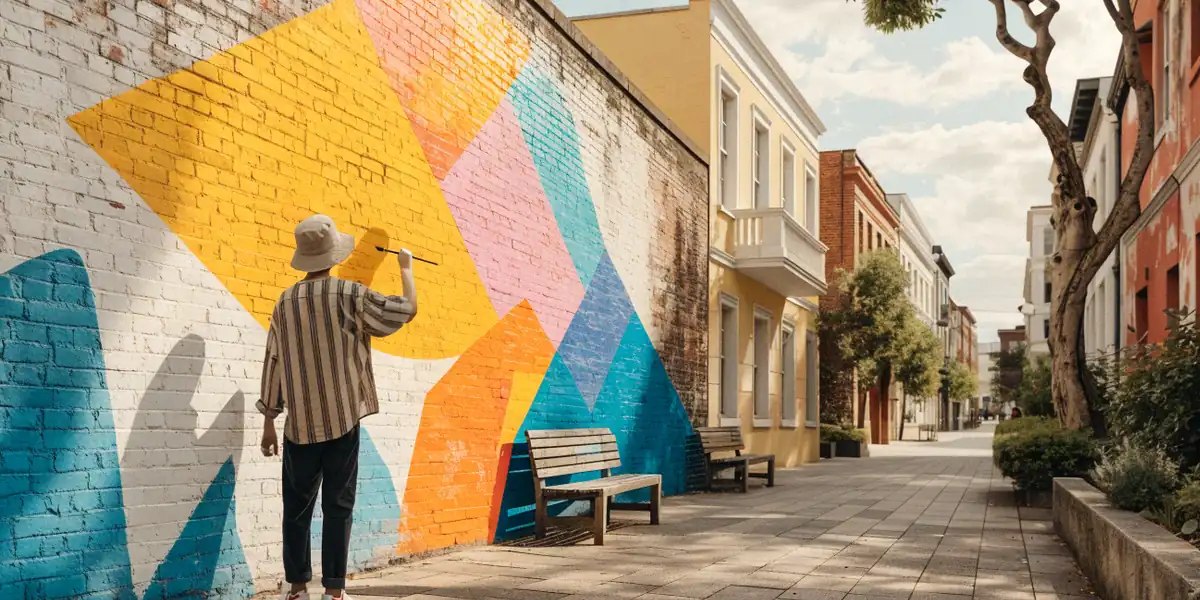
Here’s the first thing to understand: street art legality in Australia is decided locally. Federal law has almost nothing to say about a stencil on a wall in Fitzroy. Instead, local councils create the rules, and they operate within state legislation that defines what graffiti is and how it can be punished. That’s why a wall can be a celebrated legal canvas in one postcode and a fine waiting to happen in the next.
Graffiti vs. Street Art: What the Law Actually Says
Legally, the distinction usually comes down to consent. If you apply paint, stencils, or paste-ups to a surface without the owner’s permission, it’s graffiti — regardless of how beautiful it is. If you have permission, it’s generally treated as public art or a permitted mural. The Graffiti Control Act 2008 (NSW) is a good example: it defines graffiti offences around damage to property without consent, and sets penalties including fines of up to $750 for graffiti-related offences. Victoria takes a similar approach through its Graffiti Prevention Act and local laws, though the enforcement and penalty structures differ. In practice, “street art” isn’t a protected legal category — permission is what separates the two.
Why Council Rules Vary So Much Across Australia
Each council balances the same competing pressures differently: ratepayers who want clean walls, tourism bodies that see dollar signs in street art, artists pushing for space, and business owners worried about liability. Some councils, like the City of Melbourne and the City of Yarra, have embraced street art as part of their cultural identity and built formal permit systems. Others still treat any aerosol can as a threat and rely on rapid removal and anti-graffiti coatings. There’s no consistency, which means research is your first job before any can is shaken.
Legal Walls and Permitted Spaces in Major Cities
The good news is that genuine legal walls exist in every major Australian city. Some are “free walls” where anyone can paint without registration, while others require you to book a spot, register with the council, or work through a coordinator.
Melbourne: Hosier Lane and the City of Melbourne’s Approach
Hosier Lane in Melbourne is the country’s most famous legal street art precinct, managed by the City of Melbourne and visited by thousands of tourists every week. It’s a constantly rotating gallery where local and international artists paint over each other’s work, and the council actively supports it as a cultural attraction. Nearby AC/DC Lane operates in a similar spirit. Beyond the laneways, the City of Melbourne offers permits for street art on certain council-owned properties, giving artists a formal pathway to paint legally.
Sydney: May Lane and Inner West Council Initiatives
May Lane in Sydney’s Marrickville area is a legal wall coordinated by Inner West Council, and it’s been a launchpad for some of the city’s best-known street artists. The council has a long history of supporting murals and has worked with artists to formalise spaces rather than simply criminalise them. Other Inner West initiatives, including youth-focused mural programs, have helped shift the conversation from enforcement to collaboration.
Brisbane and Perth: Legal Walls You Can Actually Use
Brisbane City Council has established legal graffiti walls across the city where artists can paint freely, typically on council-owned infrastructure like underpasses and designated concrete surfaces. Perth and Fremantle have their own versions, with Fremantle in particular fostering a strong street art culture and several sanctioned walls. Before you turn up, check the specific council’s website — some walls are open access, while others require registration or are reserved for organised events.
How to Get a Permit for Street Art in Australia
If you want to paint somewhere that isn’t already a designated legal wall, you’ll usually need a permit. The process varies, but the broad steps are consistent across most councils.
Step-by-Step: Applying for a Council Permit
- Identify the exact location and confirm who owns it — council, state government, or private owner.
- Contact the relevant council’s arts, cultural development, or public spaces team to ask about their street art permit process.
- Submit a proposal with a design sketch, dimensions, materials, and timeline.
- Obtain written consent from the property owner if the wall isn’t council-owned.
- Provide proof of public liability insurance, usually $10 million or $20 million.
- Pay any applicable application or maintenance fee.
- Wait for approval before you touch the wall — painting early can void the whole application.
The City of Melbourne, City of Sydney, and City of Yarra all have formal permit systems for street art and murals, and their arts teams are generally approachable if your proposal is well-prepared.
What to Include in Your Portfolio or Proposal
Councils want to see that you’re professional and that the work will enhance the space. Include high-quality images of previous work, a clear concept for the site, a colour palette, and a maintenance plan. If your piece references local history or community themes, say so — it significantly improves your chances.
Insurance and Public Liability: What You Need to Know
Public liability insurance is non-negotiable for most permits. It protects you and the council if someone is injured or property is damaged during your work. Many artist guilds and peak bodies offer affordable policies, and some councils run group insurance schemes for registered artists. Don’t skip this step — it’s the single most common reason applications stall.
When Street Art Crosses the Line: Penalties and Fines
We’re not going to pretend the consequences are trivial. Illegal stencilling can cost you far more than a can of paint.
Fines and Penalties by State
- NSW: The Graffiti Control Act 2008 sets fines up to $750 for graffiti offences, with heavier penalties for repeat offences and possession of graffiti implements.
- Victoria: On-the-spot fines and clean-up orders apply, with criminal charges possible for serious or repeat damage.
- Queensland: Graffiti offences carry fines and, in serious cases, court appearances.
- Western Australia: Penalties escalate with the value of damage caused.
Repeat offences can lead to jail time in several states, particularly where the damage is extensive or targeted at public infrastructure.
How Councils Enforce Anti-Graffiti Laws
Councils use a mix of surveillance, rapid removal crews, and anti-graffiti coatings that make paint easy to wash off. Some employ dedicated graffiti removal teams and work with police on targeted operations. Ironically, these coatings can also make life harder for legal artists, since they affect how paint adheres to a surface.
The Future of Legal Street Art in Australia
The trajectory is clear: street art is being reframed from nuisance to cultural asset. Councils now commission murals, sponsor festivals, and promote laneway precincts to tourists. The Australian Stencil Art Prize is a national competition that celebrates stencil art and helps legitimise the medium, giving artists a platform that sits firmly inside the cultural sector rather than the courts.
How Prizes and Festivals Are Changing Perceptions
Events like the Australian Stencil Art Prize, Melbourne’s street art tours, and precinct festivals have shifted public opinion. When ratepayers see visitors spending money in laneways, the political calculus changes. Councils that once funded removal crews now fund mural programs.
What Artists Can Do to Push for More Legal Spaces
Show up to council consultations. Join local arts networks. Document your work and its community impact. Propose specific walls with a maintenance plan. The artists who’ve secured the best legal spaces in Australia didn’t wait for permission — they built relationships and made the case.
Street art belongs in our cities, not just in court. Do your research, get the permit when you need one, insure yourself, and keep pushing your council for more legal walls. The more artists engage with the system, the more the system will make room for us.
FAQ
Is street art legal in Australia?
It depends entirely on where you are and whether you have permission. Street art on a designated legal wall or with a council permit is legal. Applying paint to a surface without consent is treated as graffiti and can attract fines or criminal charges.
Do I need a permit to paint a legal wall in Melbourne?
Not always. Hosier Lane and some other City of Melbourne precincts operate as open legal walls. However, if you want to paint on other council-owned properties, you’ll typically need a permit from the City of Melbourne.
What’s the fine for graffiti in NSW?
Under the Graffiti Control Act 2008 (NSW), fines can reach $750 for graffiti offences, with higher penalties for repeat offences, possession of graffiti implements, or serious damage.
How do I find legal walls in my city?
Start with your local council’s website or arts team, then check community street art groups and networks. Brisbane City Council, Inner West Council in Sydney, and the City of Melbourne all publish information about designated legal walls and permit processes.
Do I need insurance to paint a mural legally?
Yes, in most cases. Councils and property owners typically require public liability insurance, often around $10–20 million, before approving a permit or mural commission.