Paper, Mylar or Acetate: Choosing the Right Stencil Material
We still remember the first time a paper stencil turned to pulp mid-spray. The edges went soft, the bridges sagged, and a clean two-layer design became a grey smear across a Melbourne wall. It is a rite of passage for almost every stencil artist, and it raises a question worth answering properly: which material actually holds up for Australian street art conditions? Paper, Mylar or acetate each behave differently under spray paint, sun and rain, and the choice you make shows up directly in the crispness of your lines. Here is how we think through the decision, from cheap sketchbook tests to entries for the Australian Stencil Art Prize.
Why Stencil Material Matters for Street Art
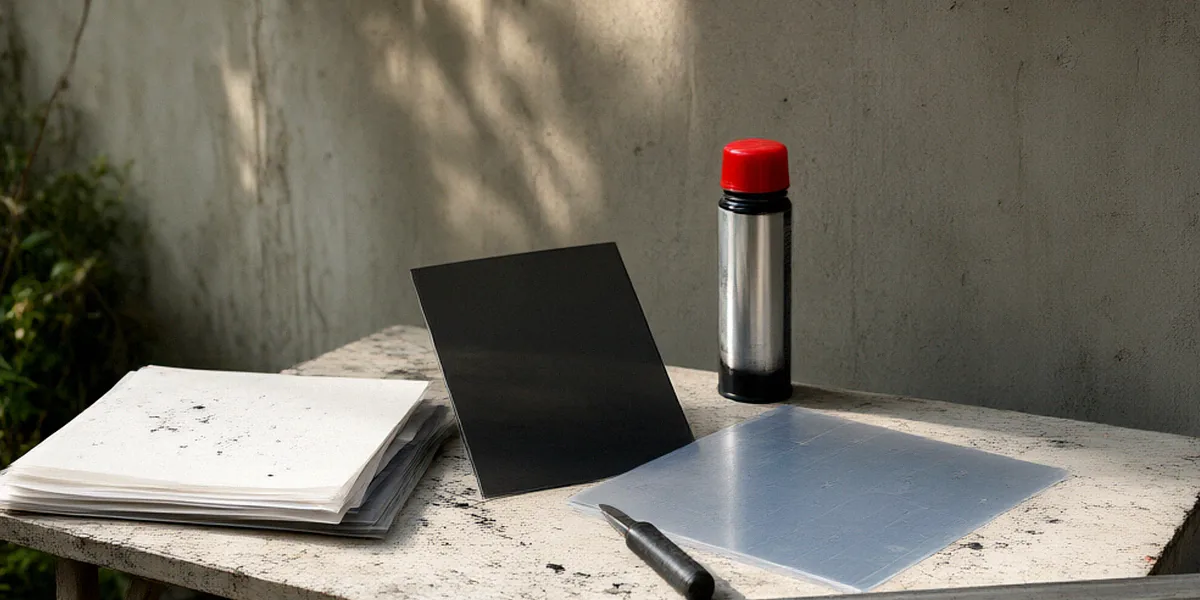
The material you cut from decides three things: how sharp your edges stay, how much paint bleeds underneath, and how many times you can reuse the stencil. A flimsy sheet lifts at the edges when the aerosol pressure hits it, and that lift becomes a fuzzy halo around every line. A stiff, solvent-resistant sheet sits flat, holds its bridges, and gives you the razor edges that judges at the Australian Stencil Art Prize look for when they assess technical control. Material choice is not a minor detail. It is the difference between a stencil that survives a whole wall and one that dies on the first pass.
How Spray Paint Interacts With Different Surfaces
Spray paint is a solvent-borne product, and it does not treat all surfaces equally. Paper absorbs the carrier solvent, swells, and loses structural strength. Mylar and acetate are non-porous, so the paint sits on the surface and wipes away, which is why both are popular for repeat sessions. The other variable is tack: low-tack spray adhesive helps any sheet sit tight, but a non-porous sheet releases more cleanly when you peel it back, leaving a sharper edge behind.
Durability in Australian Sun and Rain
Australian conditions are brutal on stencils. UV exposure makes some plastics brittle over time, and a sudden downpour will destroy any paper stencil left on a wall. Mylar handles heat and moisture far better than paper, and acetate holds its shape well indoors but becomes more prone to cracking when it is repeatedly flexed outdoors in the cold. If your work lives on exterior walls, plan for the climate, not just the paint.
Paper Stencils: Cheap, Quick and Surprisingly Versatile
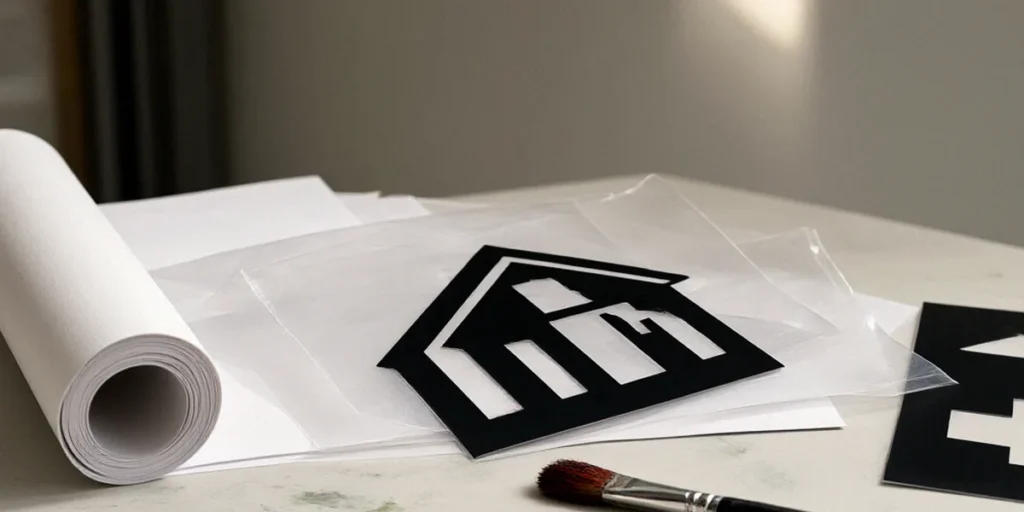
Paper is where most of us start. It is cheap, available everywhere, and you can cut it with a standard craft knife in minutes. The range runs from lightweight 80gsm printer paper through to 300gsm cardstock, with freezer paper and newsprint sitting in between. Paper suits one-off works and rapid prototyping, but it warps the moment wet spray paint hits it, and a warped stencil means blurred edges. Use it when speed and cost matter more than reuse.
Best Papers for Fine Detail
For fine detail, heavier is generally better. A 200gsm to 300gsm cardstock resists curling longer than thin printer paper, and freezer paper is a quiet favourite because it can be ironed onto a surface for a temporary bond. Newsprint is cheap for practice but tears easily and soaks up solvent fast.
When Paper Fails: Moisture and Tear
Paper fails in two predictable ways: moisture and tear. Moisture comes from the paint itself or from a damp wall, and tear comes from over-spraying and peeling. If you are cutting a multi-layer design with thin bridges, paper is usually the wrong call. Save it for bold, single-layer shapes and sketchbook tests.
Mylar Stencils: The Reusable Workhorse
If we had to pick one material for regular street work, it would be Mylar. Sheets from 5mil to 10mil, including Grafix Mylar, are flexible, solvent resistant and reusable across many spray paint sessions. They bend instead of cracking, they wipe clean, and they hold fine bridges well. For artists working repeated walls around Melbourne street art spots, Mylar pays for itself quickly because one sheet can survive dozens of sessions.
Thickness Guide for Mylar
- 5mil: best for fine detail and tight registration, but more prone to curling at the edges.
- 7mil: the sweet spot for most street work, balancing flexibility and stiffness.
- 10mil: heavy-duty choice for large stencils and rough surfaces, harder to cut but very durable.
Cleaning and Storing Mylar Stencils
Clean Mylar while the paint is still fresh. Wipe both sides with a cloth dampened with the appropriate solvent, then lay the sheet flat or roll it loosely around a tube. Never fold it, because creases become permanent weak points that lift during spraying. Stored flat and clean, a good Mylar stencil can last for years.
Acetate Stencils: Rigid, Clear and Precise
Acetate is the stiff option. Officeworks acetate sheets and those from art suppliers give you a clear, rigid sheet that sits perfectly flat and produces razor edges. That stiffness is a real advantage on flat canvas and paper, which is why acetate is a common choice for competition entries where archival quality matters. The trade-off is fragility: bend acetate too far and it cracks, so it is not the material we would choose for a curved or uneven wall.
Acetate vs Mylar: Which Is Stronger?
They are strong in different ways. Acetate is stiffer and gives cleaner edges on flat surfaces, but it is brittle under flexing. Mylar is more flexible and survives bending, which makes it tougher in the field. For flat prize entries, acetate wins on precision. For repeated exterior work, Mylar wins on survival.
Cutting Acetate Safely With a Hot Knife
A hot knife cuts acetate cleanly and leaves a smooth edge, but it produces fumes and burns, so work in a ventilated space, keep your fingers clear of the tip, and rest the tool on a heat-safe surface between cuts. For simple shapes, a fresh blade and a steady hand are often enough.
Matching Material to Your Project and Prize Entry
Practical picks, based on what we actually reach for:
- Paper for sketchbook tests and quick one-off shapes.
- Mylar for repeated street art walls in Melbourne and Sydney, where reuse and flexibility matter most.
- Acetate for Australian Stencil Art Prize submissions and flat canvas work needing archival quality and crisp registration.
Budget Picks for Beginners
Start with a pack of 200gsm cardstock for practice and one or two sheets of 7mil Grafix Mylar for real work. Add a small pack of Officeworks acetate sheets when you want to test a prize-ready piece. That combination covers almost everything without a big spend, and Blick art supplies stock comparable options if you prefer to order online.
What We Would Enter in the Prize
For a prize entry, we would cut acetate for the final stencil and run test sprays on paper first. Acetate gives the flat, rigid registration that shows off crisp lines in a framed entry, and the paper tests let us refine the design without wasting the good sheet.
FAQ
Which stencil material lasts longest for street art?
Mylar, generally 7mil to 10mil, lasts longest because it is flexible and solvent resistant. It survives repeated spray sessions and bending far better than paper or acetate.
Can I use normal printer paper for a stencil?
Yes, for one-off work and practice. It warps quickly once wet spray paint hits it, so it is a poor choice for detailed or repeated designs.
Is acetate better than Mylar for fine detail?
Acetate gives slightly sharper edges on flat surfaces because it is rigid. Mylar holds fine detail well too and is far more durable, so the best choice depends on whether the surface is flat or rough.
Where can I buy stencil materials in Australia?
Officeworks acetate sheets are easy to find in store, Blick art supplies and similar art retailers stock Mylar, and most craft shops carry cardstock and freezer paper.
Test all three materials on scrap before you commit to a final piece. Cut the same small design from paper, Mylar and acetate, spray each one, and see how the edges hold, how the sheet behaves, and how easily it cleans up. The right stencil material is not the most expensive or the most technical one. It is the one that survives your workflow and your local climate, whether that is a humid Sydney wall or a sun-baked panel in the outback.