Legal Walls in Australian Cities: Where to Paint Without Getting Busted
We still remember the adrenaline of our early days with a can in hand — the lookout, the quick throw-down, the sprint when a car slowed down. It was thrilling, sure, but it was also stupid. Nothing kills a stencil idea faster than a fine, a court date, or a record that follows you around. These days we’d rather spend our energy on the work itself, and that’s exactly what legal walls give us: a place to paint in daylight, take our time, and actually finish the piece we started. Australia has more of these spaces than most artists realise — you just need to know where they are and how to use them.
Why Legal Walls Matter for the Stencil Art Community
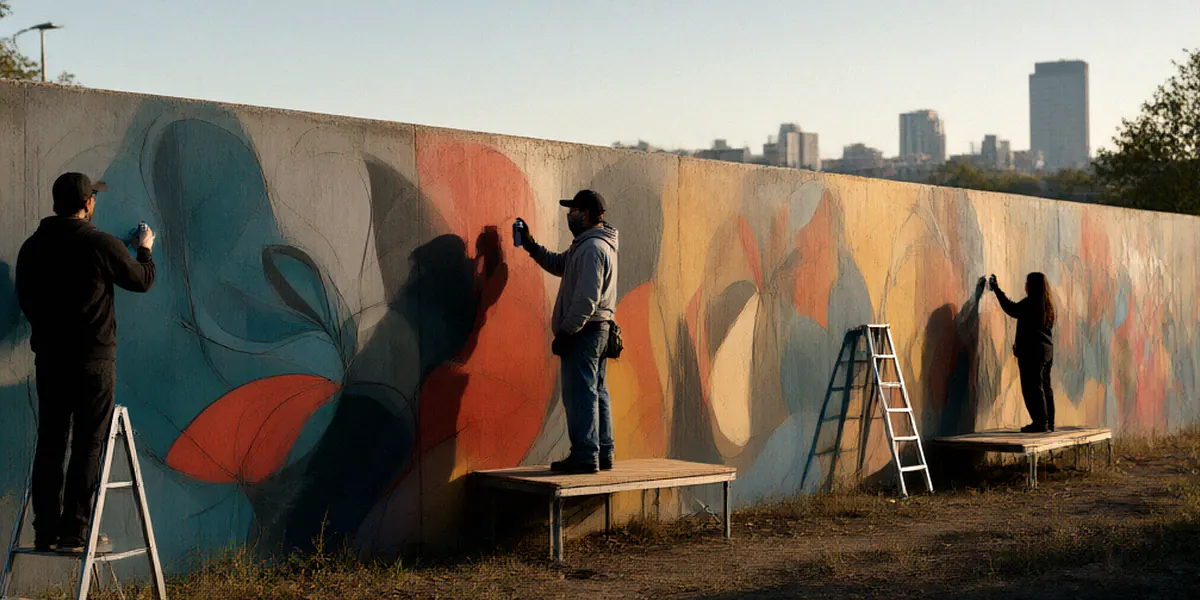
Legal walls aren’t just about avoiding trouble. They’re the training grounds where Australian stencil and street art actually gets better. When you’re not watching your back, you can layer, fix mistakes, test colour combinations, and talk to the artists painting next to you. That’s how scenes grow, and it’s how artists end up with the confidence and portfolio to enter something like the Australian Stencil Art Prize.
Safety and Legality: Avoiding Fines and Records
Every state and territory in Australia treats graffiti offences differently, but the pattern is consistent: fines run into the hundreds or thousands of dollars, and repeat offences can lead to criminal charges. Councils also have the power to issue clean-up notices and on-the-spot penalties. Legal walls remove that risk entirely. You rock up, you paint, you leave — no record, no court, no stress.
Building Community and Collaboration
Some of the best connections we’ve made came from standing at a legal wall on a Saturday morning. Legal spaces attract everyone from first-timers to veterans, and they naturally create collaboration. You’ll see stencil artists trading tips with spray paint writers, muralists offering walls to newcomers, and crews organising paint days. That community is what keeps the scene alive between prize cycles.
Experimenting with Spray Paint Techniques
Legal walls are where you can afford to fail. Want to test a new cap combination, a soft stencil edge, or a fade that needs three passes? Do it on a legal wall. We always recommend working with quality gear — MTN 94, Ironlak, Montana Black — because cheap paint behaves badly and teaches you the wrong lessons about pressure and distance.
Sydney: Legal Walls and Street Art Hotspots
Sydney has a complicated relationship with street art, but the inner west and several university and council-run sites have opened up real opportunities. Several councils now run permit systems or designated-practice zones, so it’s worth checking before you load up the car.
Sydney University Graffiti Tunnel
The Sydney University Graffiti Tunnel is the city’s best-known legal wall. It’s a covered, multi-level tunnel on the Camperdown campus where painting is permitted, and it’s been a rite of passage for Sydney artists for decades. You’ll find everything from quick tags to full stencil pieces, and it’s one of the few places where you can paint at almost any hour without hassle.
Newtown and Enmore Walls
Newtown and Enmore are the spiritual home of Sydney street art. While not every wall is legal, the inner west councils have historically been more tolerant of street art than other parts of the city, and there are designated walls and laneways where artists can work openly. King Street and its side lanes are the best place to start scouting.
Marrickville’s Industrial Spaces
Marrickville’s industrial estates have become a magnet for muralists and stencil artists. Warehouses, roller doors, and back fences are frequently offered up by owners who want the colour and exposure. It’s worth joining local street art groups to hear about walls before they’re snapped up.
Melbourne: The Street Art Capital’s Legal Options
Melbourne wears its street art reputation proudly, and the City of Melbourne’s graffiti management plan is one of the most progressive in the country. It balances enforcement with support for legal and commissioned work, which is why the city has so many tolerated and permitted walls.
Hosier Lane and Tolerated Walls
Hosier Lane in Melbourne is the most photographed street art location in Australia. It’s technically not a legal wall — painting there is illegal — but it’s been tolerated for years, and the lane is repainted constantly. If you paint there, expect crowds, cameras, and a short lifespan for your work.
Blender Studios and Creative Spaces
Blender Studios in West Melbourne is a working artist studio and one of the anchors of Melbourne’s street art scene. It runs workshops, hosts artists, and connects painters with legal walls and commissions. If you’re serious about stencil art, it’s one of the best places to plug into the local network.
Collingwood and Fitzroy Legal Walls
Collingwood and Fitzroy are packed with legal and permitted walls, including the well-known legal wall at Collingwood Children’s Farm, where artists can paint with permission. The inner north also has a steady stream of shopfronts and laneways offered up by owners who want the foot traffic that good street art brings.
Brisbane, Perth, and Adelaide: Legal Walls Worth the Trip
If you’re travelling for art — or planning a road trip around a prize deadline — these three cities have legal walls worth building a trip around.
Brisbane’s Powerhouse and Fish Lane
The Brisbane Powerhouse at New Farm is a cultural venue that has long supported street art, with rotating murals and designated painting areas. Fish Lane in South Brisbane is another hotspot, with commissioned works and a laneway culture that welcomes artists. Brisbane City Council runs a graffiti prevention program, so check current permit requirements before you paint.
Perth’s Cultural Centre and Fremantle
The Perth Cultural Centre in Northbridge includes legal and permitted walls, and it’s a central spot for artists to meet and paint. Further south, the Fremantle Arts Centre has a strong reputation for supporting street art, and Fremantle’s laneways offer plenty of opportunities. The City of Perth and City of Fremantle both have clear policies worth reading first.
Adelaide’s Fringe and Bowden Walls
Adelaide’s Fringe festival brings a burst of legal mural activity each year, with walls made available around the city. Bowden, in the inner north, has become a hub for large-scale street art and stencil work thanks to its redevelopment and the support of local developers and the council. If you’re in Adelaide, Bowden is the place to start.
How to Find and Use Legal Walls Responsibly
Finding legal walls is part research, part relationships. Here’s how we approach it.
- Check your local council’s website for graffiti management policies and designated legal walls.
- Join street art groups on Facebook and Instagram — wall leads often appear there first.
- Ask at paint shops; staff usually know which walls are open and which aren’t.
- Respect other artists’ work — don’t paint over a piece that’s still fresh without permission.
- Use quality spray paint like MTN, Ironlak, or Montana Black for better results and less waste.
- Treat the Australian Stencil Art Prize as a resource: its community and coverage often highlight walls and opportunities across the country.
Researching Local Council Policies
Every council is different. Some publish maps of legal walls, others run permit systems, and some simply tolerate certain laneways. A ten-minute check on your council’s website can save you a fine and a wasted afternoon.
Connecting with Street Art Communities
The fastest way to find walls is to know people who already paint on them. Turn up to paint days, workshops, and exhibition openings. The Australian Stencil Art Prize community is a good starting point — the artists who enter are usually generous with local knowledge.
Etiquette and Respect on Legal Walls
Legal walls stay legal because artists treat them well. Don’t cover fresh work, don’t leave empty cans behind, don’t paint over memorial pieces, and don’t bring drama. If a wall has a curator or a contact, ask before you paint. Simple courtesy keeps these spaces open for everyone.
FAQ
Is it legal to paint at the Sydney University Graffiti Tunnel?
Yes. The Sydney University Graffiti Tunnel is a designated legal painting space on the Camperdown campus, which is why it’s been a favourite for Sydney artists for decades.
Can I paint in Hosier Lane in Melbourne?
Hosier Lane is technically not a legal wall — painting there is illegal — but it has been tolerated for years and is constantly repainted. If you paint there, expect crowds and a short lifespan for your work.
Do I need a permit to paint at the Brisbane Powerhouse or Perth Cultural Centre?
It depends on the specific wall and the current policy. Both Brisbane City Council and the City of Perth run graffiti management programs, so check with the relevant council or venue before you paint.
What spray paint should I use on legal walls?
We recommend MTN 94, Ironlak, or Montana Black. They cover well, behave predictably, and hold up outdoors — which matters when your piece is going to be photographed for a prize entry.
How does the Australian Stencil Art Prize help artists find legal walls?
The Australian Stencil Art Prize connects artists across the country and showcases work from every state. Its community and coverage regularly highlight legal walls, paint days, and opportunities, making it a useful resource alongside your local council and street art groups.
Legal walls are the backbone of a healthy stencil art scene in Australia. They keep artists safe, keep work visible, and give everyone — from first-timers to prize entrants — room to grow. Support the walls that support you: paint responsibly, respect the space, and help keep them open for the next generation of Australian stencil artists.