A Short History of Stencil Art in Australia
Picture Melbourne’s Hosier Lane in the mid-2000s. The narrow bluestone laneway is layered thick with paint — wheatpastes, throw-ups, and above all, stencils. Crisp silhouettes of soldiers, children, birds and politicians stare out from every wall, some cut with surgical precision, others deliberately rough. By this point, word had spread far beyond Australia: this laneway, and the stencil culture that fed it, had become a global reference point for street art. But the story didn’t begin in the 2000s. It started decades earlier, in the punk clubs and back alleys of Sydney and Melbourne. Here’s how stencil art in Australia grew from a fringe political tool into one of the country’s most celebrated art forms — and how the Australian Stencil Art Prize came to champion it.
The 1980s: Seeds of Stencil Art in Australia
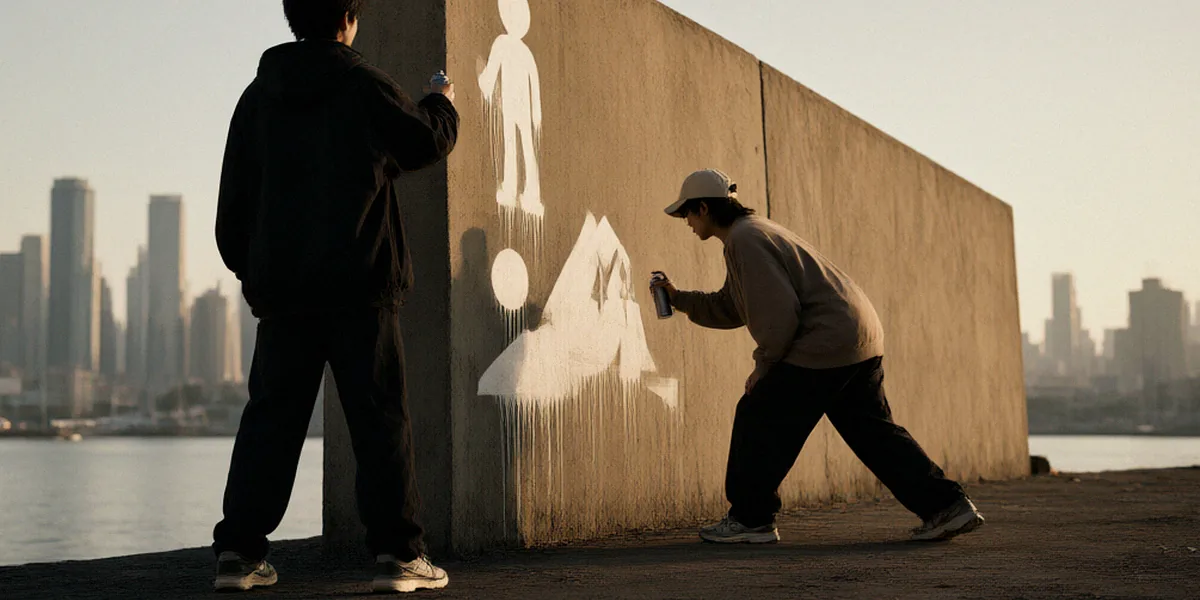
The 1980s saw the emergence of stencil art alongside punk and hip-hop culture in Sydney and Melbourne. These two cities acted as incubators, where imported records, zines and art books collided with a local DIY sensibility. Spray paint was cheap, walls were plentiful, and a generation of young artists was hungry to make its mark.
Punk and Political Roots
Stencil’s earliest Australian outings were political. Punk’s do-it-yourself ethic made the medium irresistible: cut a design into cardboard or acetate, lay it against a wall, spray, and move on. The technique was fast, repeatable and perfect for slogans — anti-nuclear messages, anti-apartheid statements, and protests against everything from uranium mining to police brutality. The influence of international artists like Blek le Rat, the Parisian pioneer often called the father of stencil graffiti, filtered into Australia through magazines and travellers’ photographs. Local pioneers adapted the approach to Australian concerns, and stencil quickly became a staple of protest culture in both Sydney and Melbourne.
Early Spray Paint Experiments
In these early years, the tools were basic. Artists worked with hardware-store enamel, cheap nozzles and whatever blades they could find. The results were often crude, but the experimentation mattered. Writers learned how to control overspray, build multi-layered images and register colour — skills that would define Australian stencil art in the decades to come. By the late 1980s, stencil imagery was appearing alongside tags and murals, quietly establishing a distinct visual language.
The 1990s: Street Art Boom and Stencil Culture
The 1990s turned stencil art from a niche practice into a defining feature of Australian street art. As inner-city neighbourhoods gentrified and empty walls multiplied, artists pushed the medium further. Two names stand out from this period: Ha-Ha, whose intricate, often haunting stencils earned international attention, and Meek, whose delicate, layered works helped define Melbourne’s visual identity.
Melbourne as a Stencil Hub
Melbourne became the undisputed centre of the stencil movement. Laneways in the CBD, Fitzroy and Collingwood filled with paste-ups and stencils, and a friendly rivalry developed between artists pushing for finer detail and bigger scale. The arrival of dedicated spray paint brands such as Montana — with its low-pressure cans and wide colour range — was a turning point. For the first time, Australian artists had tools that matched their ambition, and the quality of work jumped accordingly.
Sydney’s Street Art Scene
Sydney developed its own flavour, centred on Newtown, Enmore and the inner west. The scene was more dispersed than Melbourne’s, but no less energetic, with stencil artists mixing political commentary, pop-culture references and portraiture. The DIY ethos remained strong: photocopied zines, trading of hand-cut stencils, and informal shows in pubs and share houses kept the culture connected.
The 2000s: Global Recognition and the Australian Stencil Art Prize
By the 2000s, Australian stencil art had gone global. Melbourne’s Hosier Lane is a world-renowned street art destination, and images from its walls circulated in books, documentaries and design blogs. International artists began visiting specifically to paint alongside locals, and Australian stencil artists were invited overseas in return. The medium had moved from the margins to the mainstream — but it still lacked a dedicated platform at home.
Origins of the Australian Stencil Art Prize
That changed in 2009, when the Australian Stencil Art Prize was founded. It was the first prize of its kind dedicated specifically to stencil art, and it signalled that the form deserved serious critical attention. By inviting entries from across the country and beyond, the prize created a national snapshot of where stencil art was heading — and a rare opportunity for artists working on walls to exhibit in galleries.
Impact on Australian Artists
The prize’s influence has been significant. Artists like E.L.K. — one of the most recognised names in Australian stencil art — have used the platform to reach new audiences, and winning or being shortlisted has opened doors to commissions, exhibitions and international residencies. The annual Stencil Art Prize exhibitions have introduced collectors and curators to a generation of artists who might otherwise have remained known only on the street. In short, the prize helped legitimise the art form in the eyes of institutions without dulling its edge.
2010s to Now: Evolution and Contemporary Stencil Art
Since the 2010s, stencil art has evolved in two directions at once. On one hand, digital tools have transformed how artists design and cut their work. On the other, the traditional hand-cut stencil and spray paint technique remains at the heart of the practice — and for many artists, that’s the whole point.
New Techniques and Materials
Contemporary stencil artists now combine laser cutters, vinyl plotters, digital illustration software and projection mapping with old-school methods. Acrylics, aerosols, screen-printing and even sculptural stencils have entered the mix. Artists like Rone have pushed stencil-based imagery into large-scale installations and immersive projects, showing how far the medium can travel from its punk origins. Yet the core appeal is unchanged: a stencil is a reproducible image, and repetition is power.
Stencil Art in Galleries and Festivals
Stencil work is now a regular fixture in Australian galleries, and street art festivals in Melbourne, Sydney, Brisbane and beyond routinely feature stencil artists. The Australian Stencil Art Prize continues to run, connecting emerging artists with established ones and keeping a dedicated spotlight on the form. Councils and cultural institutions that once painted over street art now commission it.
Key Cities and Landmarks for Stencil Art in Australia
If you want to see Australian stencil art in the wild, a few places should be on your list. Each city has its own character, and each has benefited from a mix of artist-led persistence and council support.
- Melbourne: Hosier Lane, AC/DC Lane, Fitzroy and Collingwood — the historic heart of the scene.
- Sydney: Newtown, Enmore and Marrickville — politically charged, constantly changing.
- Brisbane: Fortitude Valley — a fast-growing hub with strong festival support.
- Adelaide and Perth: Smaller but active scenes, often centred on laneways and legal walls.
Melbourne: Hosier Lane and Beyond
Hosier Lane is the postcard image of Australian street art, and for good reason. It’s a living, breathing gallery where stencils appear and disappear within days. Beyond the CBD, Fitzroy’s Johnston Street and the backstreets of Collingwood offer a more local, less touristed view of the culture.
Sydney and Brisbane’s Growing Scenes
Sydney’s inner west remains the city’s stencil stronghold, with Newtown’s walls reflecting the area’s activist history. Brisbane’s Fortitude Valley has emerged as a genuine destination, supported by festivals and a council that recognises street art’s cultural and economic value. Legal walls in all three cities give artists room to experiment at scale — and give visitors a reason to keep coming back.
Stencil art remains a vital, evolving part of Australia’s cultural identity. From punk protest slogans to museum-grade exhibitions, the medium has proven remarkably adaptable, and the Australian Stencil Art Prize continues to champion new talent year after year. Whether you’re an artist cutting your first stencil or a collector hunting your next piece, there’s never been a better time to be part of it.
FAQ
When was the Australian Stencil Art Prize founded?
The Australian Stencil Art Prize was founded in 2009, making it one of the first prizes in the world dedicated specifically to stencil art.
Where can I see stencil art in Australia?
Melbourne’s Hosier Lane is the most famous destination, but Sydney’s Newtown, Brisbane’s Fortitude Valley and laneways in Adelaide and Perth all have thriving scenes worth exploring.
Who are some key Australian stencil artists?
Ha-Ha, Meek, E.L.K. and Rone are among the most recognised names, each with a distinct approach to stencil technique and scale.
What spray paint do Australian stencil artists use?
Brands such as Montana are widely used by Australian stencil artists, thanks to their low-pressure cans, consistent output and broad colour range.
Can I enter the Australian Stencil Art Prize?
Yes — the prize is open to stencil artists, with entry details, categories and deadlines published on the official Australian Stencil Art Prize website each year.