Stencil Artists Who Shaped the Scene
At dawn in Melbourne’s Hosier Lane, the city is quiet except for the hiss of a spray can. Overnight, someone has layered a new portrait over a wall of tags, and by breakfast, tourists will be photographing it. Hosier Lane in Melbourne is a world-famous street art destination, and stencil art is one of the reasons why. But who are the artists behind this movement? We’ve spent years following the scene, and in this post, we’re tracing the stencil artists who built it — from the early pioneers to the names defining it today.
The Pioneers: Melbourne’s Early Stencil Revolution
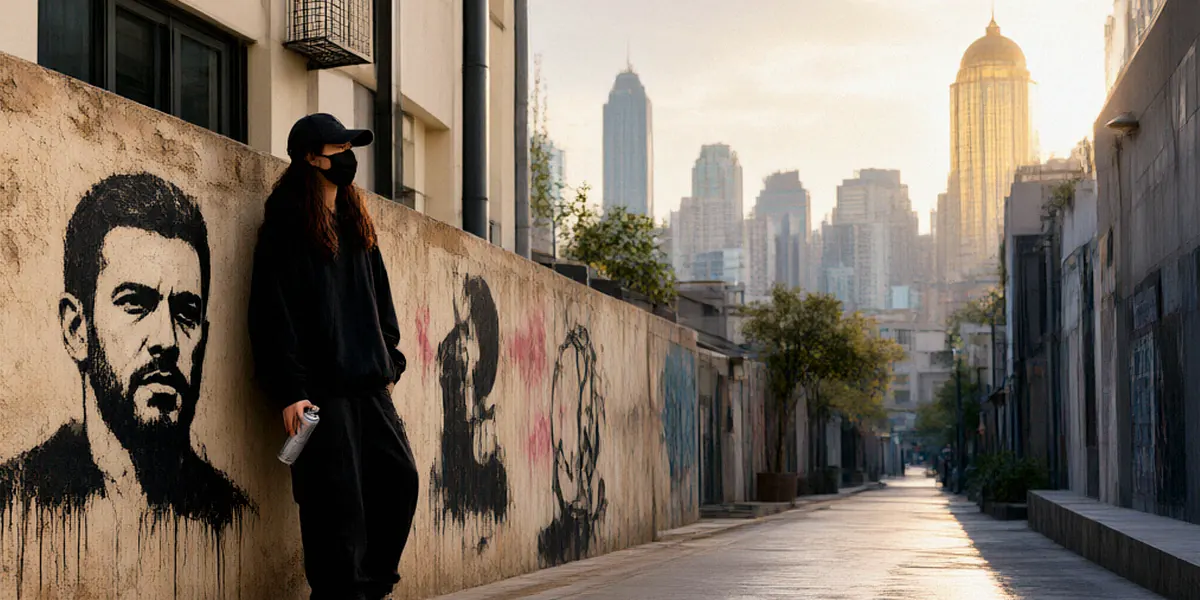
Long before street art tours and Instagram reels, Melbourne’s stencil scene grew out of punk culture, DIY zines, and a city that tolerated — even encouraged — painting on its walls. The 1980s and 1990s laid the groundwork for everything that followed.
From Punk Zines to Laneway Walls
The first wave of Australian stencil art owed a lot to punk zines. Artists cut stencils by hand from acetate and cardboard, often reproducing the same stark, high-contrast imagery they’d seen in photocopied magazines. Spray paint was cheap, stencils were portable, and the laneways were free canvases. Early figures like Satta and Meeks became known for their distinctive letterforms and repeated motifs, pasting and spraying across Melbourne’s inner suburbs. Their work was raw, political, and deliberately temporary — a direct reaction to the polished advertising surrounding them.
The Role of Melbourne’s Hosier Lane
Hosier Lane turned that scattered activity into a destination. Running off Flinders Street, the bluestone laneway became a rotating exhibition space where stencil artists could test ideas in public. Its walls change weekly, sometimes daily, and that constant turnover is the point. For many Australian stencil artists, Hosier Lane was the first place their work was seen by an audience beyond their crew.
Breakthrough Artists and the Australian Stencil Art Prize
If the 1990s built the culture, the 2000s built the careers. The Australian Stencil Art Prize is a major national award for stencil artists, and it has become one of the most important platforms in the country for artists working with cut stencils and spray paint.
E.L.K. and the Rise of Portrait Stencils
E.L.K. (Luke Cornish) was a winner of the Australian Stencil Art Prize, and his success helped push portrait stencils into the mainstream. Working with dozens of hand-cut layers, Cornish builds photorealistic faces from spray paint alone — a technique that demands patience, precision, and a very steady hand. His recognition through the Prize showed younger artists that stencil work could hold its own alongside any other medium in a gallery context.
How the Prize Elevates Emerging Talent
For finalists, the Prize is often a turning point. It offers:
- National exposure to collectors, galleries, and press
- A reason to push technical boundaries with multi-layer stencils
- Connections with other artists working in the same niche
- A credible line on an artist CV that opens commercial doors
We’ve watched artists go from painting laneways to selling out solo shows, and the Prize is frequently the hinge point.
Global Impact: Aussie Stencil Artists Abroad
Australian stencil art didn’t stay local. Artists from Melbourne and beyond have taken the craft to London, New York, Berlin, and Tokyo — often carrying the same spray paint habits and stencil techniques they developed at home.
Rone’s Haunting Portraits and International Shows
Rone is a Melbourne-based stencil artist known for large-scale portraits, often of women, painted in faded, melancholic tones on abandoned buildings. His installations in derelict spaces — from country Victoria to overseas — have drawn international attention and turned him into one of Australia’s most recognisable street artists. Even with a global schedule, his work remains tied to Melbourne’s walls and its weather-beaten surfaces.
Ha-Ha’s Political Stencils and Global Reach
Ha-Ha built a reputation on sharp, politically charged stencils, often using layered imagery and text to comment on war, consumerism, and national identity. His work has appeared in cities across Europe and North America, and his ability to communicate a complex idea in a single spray-painted image is a hallmark of the Australian stencil tradition.
The New Wave: Contemporary Stencil Artists to Watch
The current generation is pushing stencil art in new directions — more layers, more colour, and themes that reach well beyond the laneway.
Lisa King’s Bold Portraits
Lisa King combines stencil techniques with painting and collage, producing bold portraits that explore identity, culture, and the female gaze. Her work sits comfortably in galleries while retaining the graphic punch of street art.
Vexta’s Cosmic Stencils and Street Art Festivals
Vexta works with cosmic imagery, geometric patterns, and fluorescent spray paint, often at mural scale. Her presence at street art festivals around the world has helped keep Australian stencil work visible on the international circuit.
Preserving the Legacy: Archives, Crews, and Community
Stencil art is ephemeral by nature, which makes preservation a genuine challenge. Crews, archives, and prizes all play a role in keeping the history alive.
Everfresh Crew and Melbourne’s Collective Spirit
Everfresh is a renowned Melbourne street art collective, and its members have been central to the city’s reputation for collaborative, high-quality street work. Crews like Everfresh provide mentorship, shared studio space, and the kind of peer feedback that helps artists develop.
Institutional Recognition and Future Challenges
Institutions have started to take notice. The National Gallery of Australia holds street art in its collection, signalling that stencil work is being treated as cultural heritage rather than vandalism. The challenge now is balancing that recognition with the raw, unauthorised energy that made the scene worth documenting in the first place.
Frequently Asked Questions
What is the Australian Stencil Art Prize?
It’s a major national award for stencil artists, open to Australian and international entrants working with stencil techniques. It’s one of the key platforms for recognising excellence in the medium.
Who are some well-known Australian stencil artists?
E.L.K. (Luke Cornyn), Rone, Ha-Ha, Lisa King, and Vexta are among the most recognised names, along with early pioneers like Satta and Meeks.
Where can I see stencil art in Australia?
Melbourne’s Hosier Lane is the most famous spot, but Sydney, Brisbane, and Perth all have active laneway and mural scenes worth exploring.
How can I support Australian stencil artists?
Buy prints and originals directly from artists, attend exhibitions and the Australian Stencil Art Prize shows, and follow local crews and galleries on social media.
Australian stencil artists have built a scene that’s respected worldwide — from the pioneers cutting stencils by hand in the 1980s to the artists showing in Berlin and New York today. We think the best way to honour that legacy is to keep showing up: visit the Australian Stencil Art Prize exhibitions, buy work from local artists, and pay attention to the walls around you.