
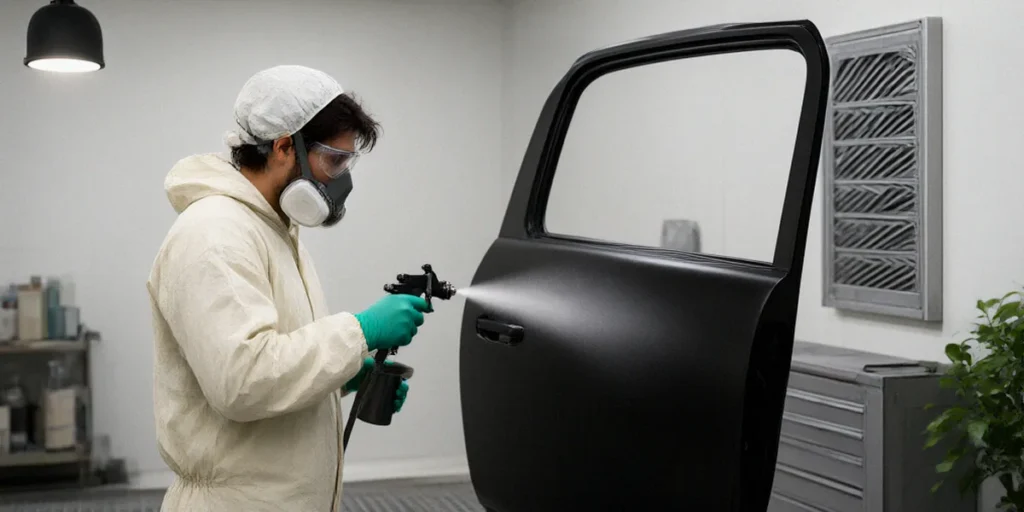
Spray Paint Safety and Ventilation: A Must-Read for Australian Stencil Artists
We still remember the afternoon a mate called us from his garage in Marrickville, voice shaky, after he’d spent three hours cutting and spraying a detailed multi-layer stencil with the roller door down. He’d assumed that because he was “only doing a small piece”, a quick bandana over his face would be fine. By the time he finished, he had a splitting headache, dizziness, and a metallic taste in his mouth that lasted two days. That was a wake-up call — not just for him, but for our whole crew. Whether you’re prepping an entry for the Australian Stencil Art Prize or just messing around with a fresh Montana can on a Sunday, the stuff coming out of that nozzle is not something you want sitting in your lungs. This guide covers what we’ve learned about staying safe while keeping our stencil art sharp.
The Hidden Dangers of Spray Paint
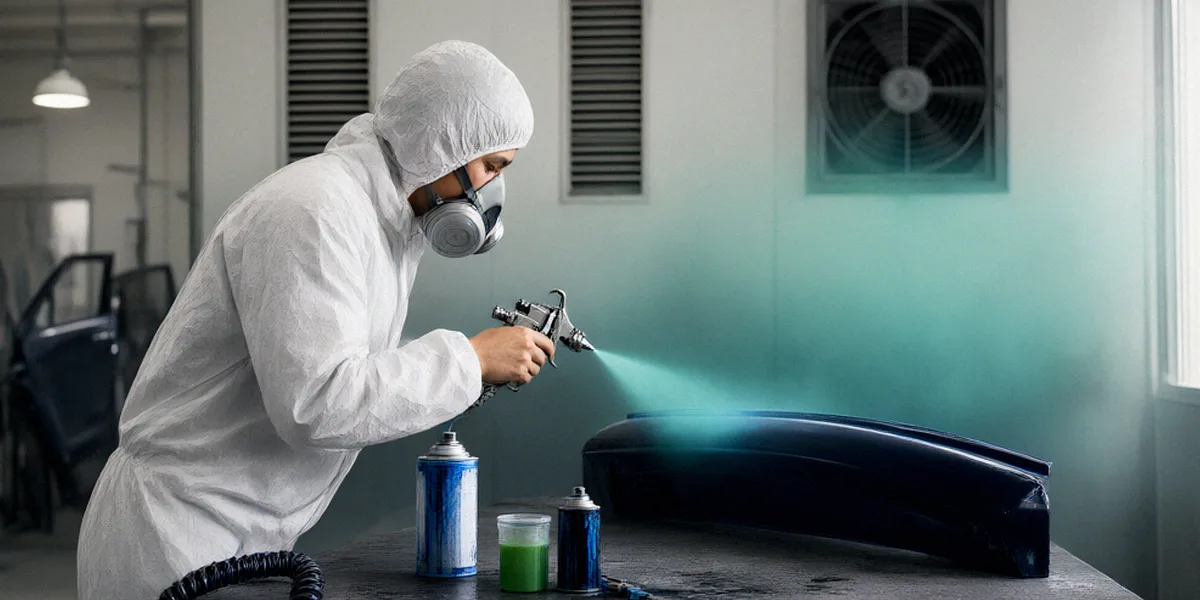
Spray paint is a cocktail of solvents, pigments, propellants, and binders, and when you press that cap, you’re aerosolising all of it into the air you’re breathing. In Australia, popular brands like Montana Colors and Ironlak are staples in most stencil artists’ kits, and while they’re formulated for artists, they still contain volatile organic compounds (VOCs) and fine particulates that can do real damage in an enclosed space.
What’s Actually in Your Can?
The main offenders are solvents such as xylene, toluene, acetone, and butane-based propellants. These chemicals evaporate quickly, which is why you smell them so strongly, and why they accumulate fast in a closed studio or garage. Pigments add another layer of risk — some metallic and fluorescent colours contain heavy metals that are particularly nasty when inhaled as fine dust. VOCs are the headline concern here, because they’re the compounds linked to the most serious health effects.
Short-Term vs Long-Term Health Effects
Short-term exposure typically shows up as headaches, nausea, dizziness, eye and throat irritation, and that classic “paint hangover” the next morning. These symptoms usually fade once you get fresh air, but they’re a warning sign. Long-term, repeated exposure to VOCs and particulates has been associated with chronic respiratory conditions, reduced lung function, and neurological effects including memory problems and mood changes. Painters and industrial workers have documented these risks for decades, and artists working in home studios are just as exposed if they skip ventilation and respiratory protection.
Choosing the Right Respiratory Protection
If you only invest in one piece of safety gear, make it a proper respirator. A cheap dust mask from the hardware aisle is not going to cut it against solvent vapours — you need something rated for organic vapours, and you need it to fit properly. Here’s how the options stack up.
Disposable Masks: Are They Enough?
Standard N95 or P2 disposable masks filter out particles but not VOC vapours, so they’re only useful for light sanding or dry work — not for actual spraying. If you’re doing a quick touch-up outdoors with a light breeze, a P2 mask is a bare minimum, but it won’t protect you from the solvents. For anything involving a full can, step up.
Half-Face Respirators: The Gold Standard
A half-face respirator with replaceable organic vapour cartridges is what we recommend for all indoor spray work. Brands like 3M and Sundström are widely available in Australia, and Bunnings Warehouse stocks a solid range of 3M half-face respirators and replacement cartridges. Sundström units are a bit pricier but are favourites among professional painters for their comfort over long sessions. Look for cartridges rated for organic vapours and particulates (often combined as A1P2 or similar).
Fit Testing and Maintenance
A respirator that doesn’t seal is basically a fashion accessory. Before each session, do a positive and negative pressure check: cover the cartridge inlets with your palms and breathe in — the mask should suck against your face with no leaks. Store cartridges in a sealed bag when not in use, and replace them when you can smell solvent inside the mask or after roughly 40 hours of use. Beards and heavy stubble will break the seal, so shave before serious spraying sessions.
Ventilation Strategies for Studios and Garages
Respiratory protection is only half the equation. You also need to move the contaminated air out of your workspace, and in Australia’s climate, that’s not always straightforward — a 40°C day in Perth or a humid Brisbane summer changes how you approach airflow.
Natural Ventilation: Doors, Windows, and Fans
Cross-ventilation is the cheapest and simplest strategy: open a window or door on one side of the space and another on the opposite side, so air flows through rather than just circulating. Position yourself between the fresh air source and the exhaust point, so the spray mist is pushed away from you. Add a pedestal fan behind you to help drive air toward the exit, but never point a fan directly at your spray area — it’ll blow overspray everywhere.
Mechanical Ventilation: Exhaust Fans and Spray Booths
For a dedicated studio, an exhaust fan mounted in a wall or window is a game changer. Aim for a fan rated to move at least 10 to 15 air changes per hour in your space. If you’re spraying regularly, a proper spray booth with a filtered extraction system is the gold standard — even a DIY booth made from a large cardboard box and a ducted fan will dramatically reduce your exposure. In hot Australian summers, you can pair extraction with evaporative cooling, but never rely on air conditioning alone — it recirculates the same contaminated air.
Outdoor Spraying: Best Practices and Weather Considerations
Spraying outdoors is often the safest option, but wind is your enemy. A light breeze can carry overspray onto cars, fences, and neighbours’ washing, and a gusty day can blow solvent straight back into your face. Spray with the wind at your side, not directly at your back or front. Avoid spraying on days above 35°C, as solvents evaporate faster and VOC concentrations spike, and steer clear of humid conditions that can affect paint adhesion and drying.
Personal Protective Equipment (PPE) Beyond Masks
Your lungs aren’t the only thing at risk. Skin contact with solvents can cause dermatitis, and eyes are extremely vulnerable to aerosolised paint. Australian suppliers like SafetyQuip and RSEA carry everything you need, and most capital cities have a walk-in store.
Gloves: Nitrile vs. Latex
Nitrile gloves are the better choice for spray painting — they resist solvents far better than latex, which degrades quickly on contact with thinners and acetone. Latex is fine for general studio cleanup but not for handling solvents. Buy them by the box; you’ll go through more than you think.
Eye Protection: Goggles and Face Shields
Sealed safety goggles protect against airborne mist and drips, while a full face shield adds protection for your skin and is worth wearing when you’re spraying overhead or working with a high-output can. Standard sunglasses don’t count — they leave gaps around the sides.
Clothing: Disposable Suits and Aprons
Coveralls or a dedicated spray apron keep paint off your skin and your regular clothes. Disposable Tyvek-style suits are cheap and effective, and a good apron can be reused for months. Long sleeves and long pants are non-negotiable, even in summer.
Safe Spray Painting Practices and Cleanup
Good technique reduces both waste and exposure. Here’s what we’ve picked up over years of trial and error.
Spraying Technique: Distance and Angle
Hold the can 15 to 25 centimetres from the surface, keep it perpendicular, and move in smooth, even passes. Spraying too close causes drips and heavy overspray; too far wastes paint and creates more airborne mist. Always spray in a direction that moves the mist away from your body.
Managing Overspray and Drips
- Use cardboard or drop sheets to catch overspray, and tape off surrounding surfaces.
- Work in thin, light coats rather than one heavy pass.
- Wipe drips immediately with a rag dampened with the appropriate thinner — don’t let them cure.
- Keep a sealed bin nearby for used rags, as solvent-soaked rags are a fire risk.
Disposal of Cans and Solvents
Empty aerosol cans can usually go in your regular recycling bin only if your local council accepts them — check your council guidelines, because rules vary widely across Australia. Partially full cans, solvent-soaked rags, and leftover thinners are hazardous waste and must go to a council-run chemical collection service or a designated drop-off point. Never pour solvents down the drain or into stormwater, and never toss aerosol cans into a general waste bin if they still contain pressure.
Legal and Environmental Responsibilities in Australia
Beyond personal safety, there are legal obligations that apply to anyone using spray paints and solvents, whether in a home studio or a commercial space.
VOC Regulations and You
Australian EPA guidelines govern VOC emissions, and while individual artists aren’t usually subject to the same reporting requirements as industrial operations, businesses and shared studio spaces can be. If you’re running workshops or operating a commercial studio, it’s worth checking your state’s EPA website for current thresholds and requirements.
Waste Disposal: What Goes Where?
Local council guidelines dictate proper disposal of spray cans, solvents, and contaminated materials. Most councils run periodic household chemical cleanout days, and some have permanent drop-off facilities. Fines for illegal dumping can be substantial, so it pays to know your local rules.
Environmental Impact and Sustainable Choices
Low-VOC and water-based spray paints are becoming more common, and while they’re not yet a perfect match for solvent-based cans in terms of finish, they’re improving every year. Buying only what you need, storing cans correctly, and choosing refillable or low-emission products all reduce your environmental footprint.
Frequently Asked Questions
Can I just spray outdoors and skip the respirator?
Outdoors is safer, but not risk-free. If there’s no breeze and you’re spraying for more than a few minutes, VOCs can still build up around your face. We recommend wearing at least a P2 mask outdoors and a full half-face respirator for anything longer than a quick touch-up.
How often should I replace my respirator cartridges?
Replace them when you can smell or taste solvent inside the mask, or after roughly 40 hours of active use. If you’re spraying frequently, keep a spare set on hand so you’re never tempted to push a saturated cartridge.
Are Montana and Ironlak cans more or less toxic than cheap hardware-store spray paint?
Artist-grade brands like Montana Colors and Ironlak often have better pigment quality and smoother output, but they still contain VOCs and solvents. The health risks are broadly similar — always check the safety data sheet and treat all aerosol paints with the same caution.
Where can I drop off old spray cans and solvent waste?
Check your local council’s website for household chemical cleanout dates or permanent drop-off locations. Many councils also list which containers are accepted for recycling, since rules differ between states and even between neighbouring councils.
Do I need a spray booth if I only spray occasionally?
Not necessarily, but you do need strong cross-ventilation and a respirator. A DIY booth made from a cardboard box and a ducted fan is a cheap upgrade that makes a real difference, especially in a garage or small studio.
Safety in stencil art isn’t a one-time purchase or a box you tick — it’s an ongoing habit that evolves as your practice grows. Whether you’re prepping a piece for the Australian Stencil Art Prize or just experimenting with a new Ironlak colour on a Saturday afternoon, protecting your lungs, skin, and eyes should be as automatic as shaking the can. We’d love to hear what works in your studio — share your own ventilation hacks and safety tips with the community, because the best lessons often come from other artists who’ve been there.